
Yoga Tops: Specify Collars, Sleeves and Zips
Specify wholesale yoga tops by deciding the neckline, sleeve coverage, closure and intended layering role for each style. Use a garment reference for every selected design, then request measurements and sample views that show those features clearly. A polo tank, short-sleeve zip top and long-sleeve jacket should answer different assortment needs rather than compete as interchangeable items.
A tops collection becomes easier to buy when every item has a defined role. The buyer may need an open-arm silhouette, a short-sleeve zip option or a layer with more arm coverage. Zherun lists examples of all three in its yoga apparel directory. Build the enquiry around those observable differences before discussing colours, quantities or any claimed fabric benefit.
Give each top a reason to enter the assortment
Write one intended role beside each shortlisted style. A sleeveless polo reference can supply a collared look without sleeves; a zip top introduces an opening at the front; a long-sleeve option changes the coverage. This simple exercise helps a merchandise team explain why several tops belong in the range without assuming demand or promising sales.
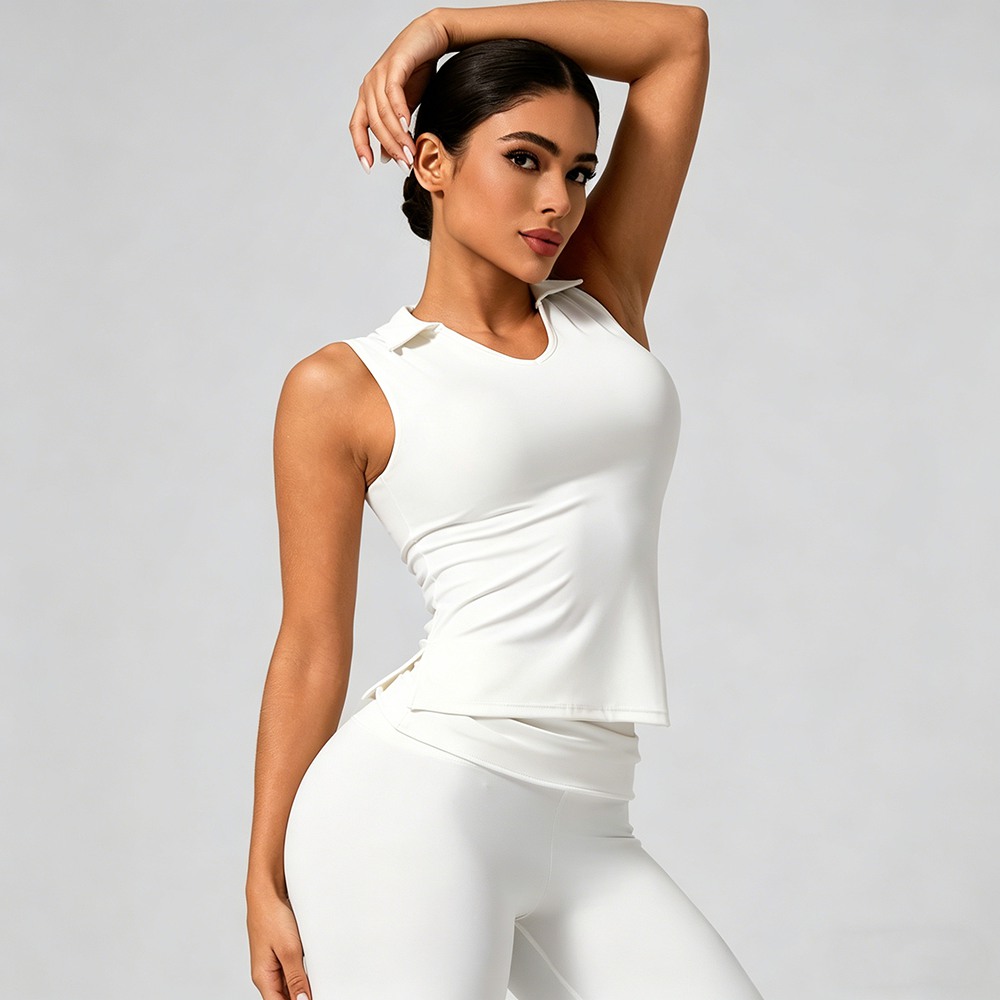
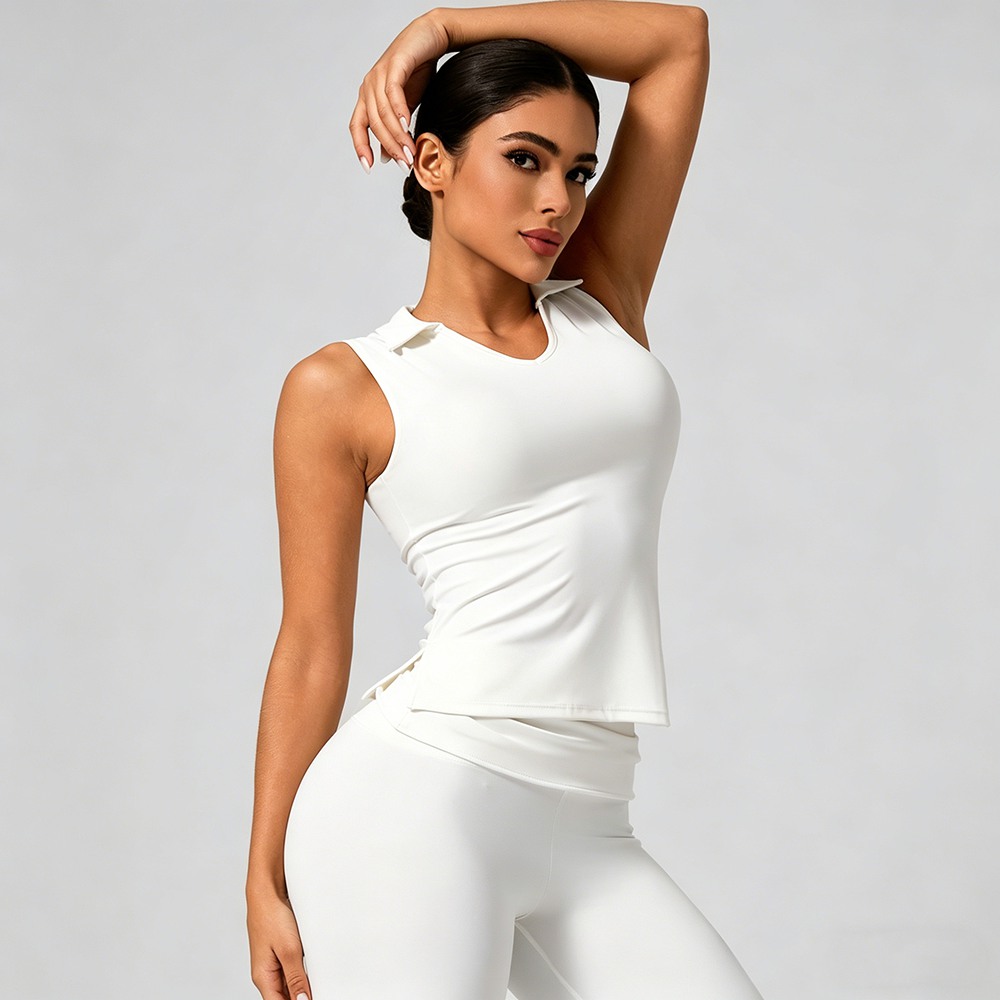
The polo-neck tank top ZR-836 shows a collar, notched neckline and sleeveless shape. Use the front, back and hem views to decide which details are essential to the brief. Record the requested side coverage and body length so that the polo appearance does not become the only instruction.
- Assign a clear assortment role to each selected top.
- Identify neckline, sleeve and closure details separately.
- Request measurements and views for the exact garment.
Translate collar and sleeve choices into questions
A useful product comparison asks how the selected details will be reviewed. For the polo, inspect collar placement and the neckline edge. For a short sleeve, look at the sleeve opening and the line across the upper arm. For long sleeves, record cuff treatment and sleeve length. These are concrete sample questions that can be answered with images and garment measurements.
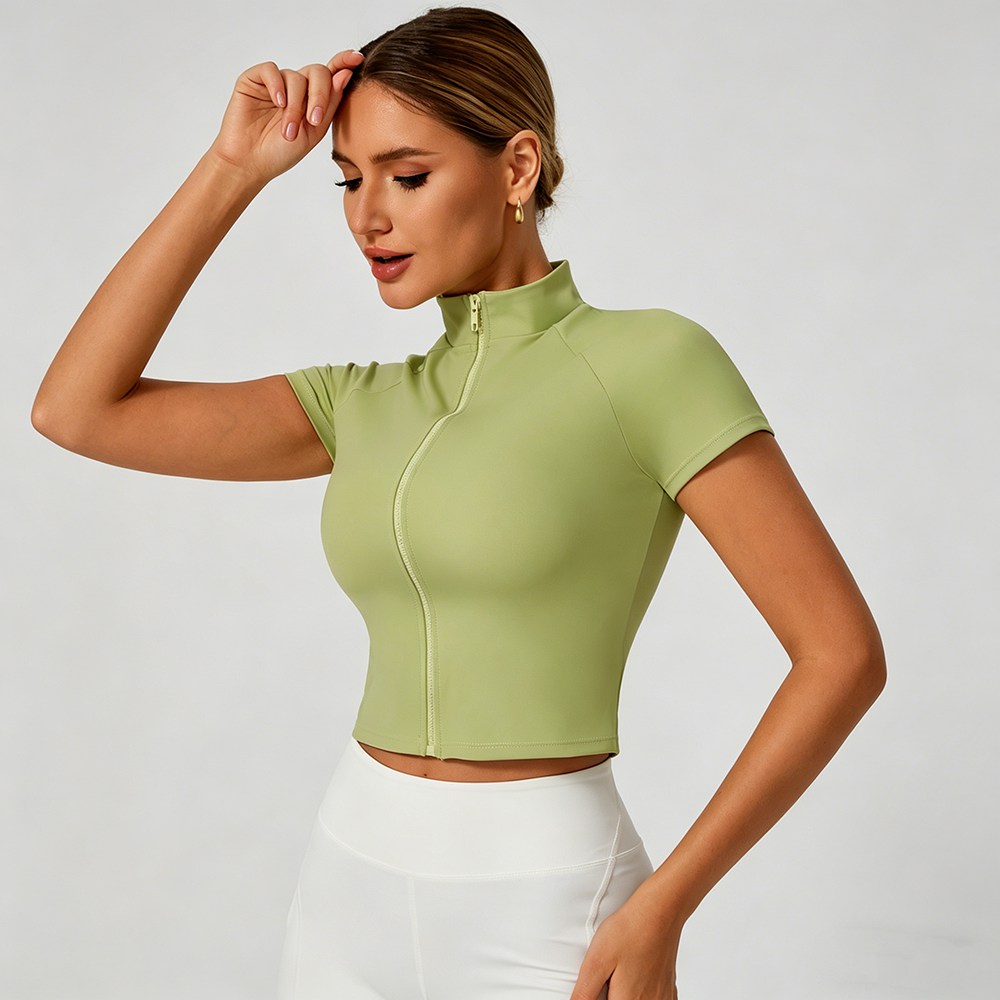
Zherun’s short-sleeve zip top reference provides a stand-collar alternative. Include the exact product link in the enquiry, then request confirmation of the selected garment’s construction and item reference. Product naming alone should not decide those fields when a detailed written specification and physical sample are available.
| Top reference | Visible distinction | Sample decision |
|---|---|---|
| Polo tank ZR-836 | Collar and sleeveless shape | Neckline, armhole and hem coverage |
| Short-sleeve zip top | Stand collar and front opening | Sleeve opening and closure alignment |
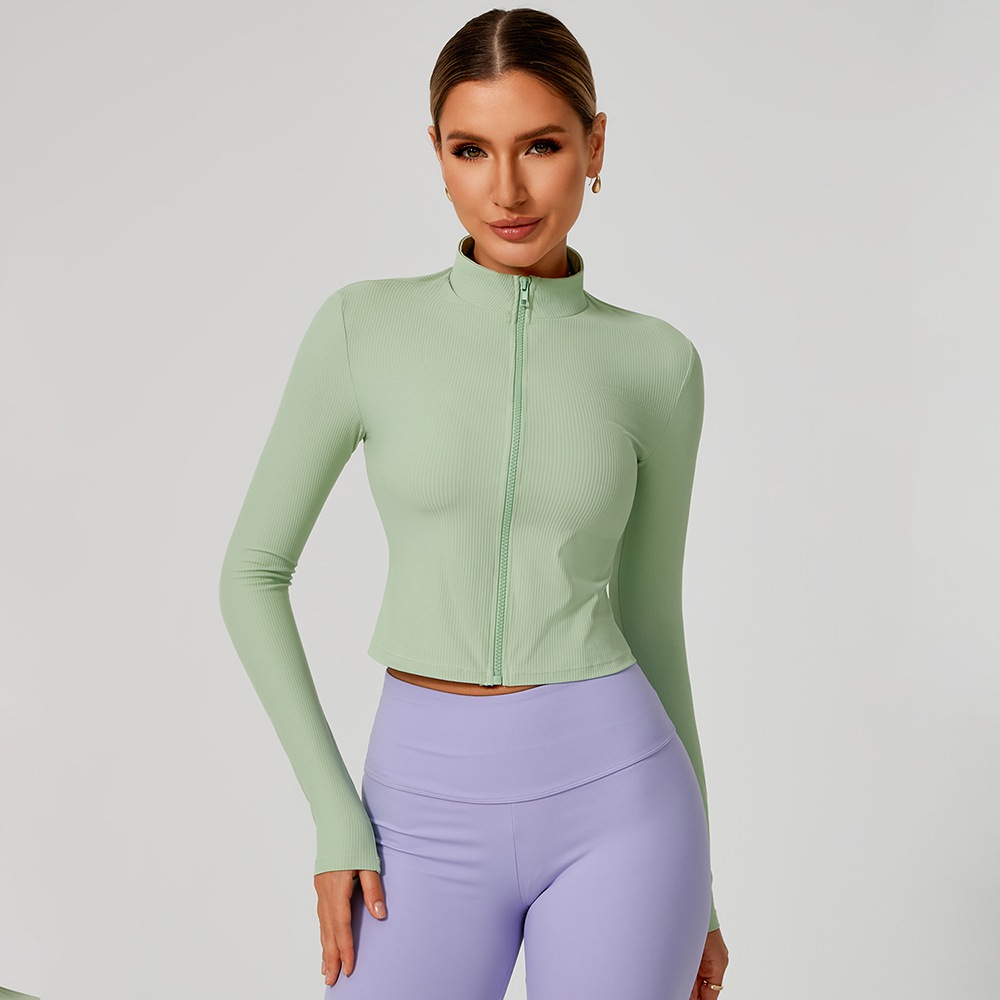
| Long-sleeve zip jacket | Ribbed surface and longer sleeves | Cuff finish and intended layering |
Review the zipper as part of the finished garment
For a zip-front sample, inspect the opening both closed and partly open. Observe the collar at the top, the alignment of the front edges and the hem at the lower end. Ask the reviewer to note where a closure feels awkward or the front visibly pulls. Keep the observation linked to the size and sample version being examined.
Confirm the zipper colour, pull appearance and intended opening arrangement in the sample comments. If a change is requested, include a close photograph and describe the desired result in plain language. A closed front photograph cannot answer all closure questions, so request the views needed before treating the design as settled.
Decide how the top meets other garments
Review a short or long-sleeve top with the bottom or underlayer intended for the range. Note where the hem finishes and whether the chosen layers create unwanted bunching or exposure during ordinary movement. This is especially useful when a collection contains several waist heights or when the top will be photographed in more than one outfit.
The long-sleeve zip jacket reference shows ribbed texture, a stand collar and a front closure. Ask for the selected body and sleeve measurements, and confirm the exact cuff finish on the sample. Use those details to distinguish it from the short-sleeve design rather than treating sleeve length as the only difference.
Send an RFQ that separates design from evidence
Prepare an enquiry table with one row per top. Include the product link, selected collar and sleeve shape, colour reference, measurement request and proposed quantity breakdown. State any requested changes explicitly. If the tops must coordinate with another garment, attach that reference and describe the intended relationship instead of relying on a shared colour name.
Submit the enquiry through Zherun contact and ask for confirmation of the sample options and current commercial terms. Request material documentation or performance evidence for any retail statement you intend to make. Keep those requests beside the visual specification so the sample approval does not accidentally imply that every promotional claim has already been verified.
Frequently Asked Questions
Is a polo tank interchangeable with a zip top?
They provide different visible design and opening choices. Define the role of each and select the garment that fits the planned assortment.
Which zipper views help a buyer review a sample?
Request the closed front, partly open collar and a close view of the lower end. Add any view needed to explain an observed issue.
Should catalogue construction terms be copied into an order?
Confirm the actual construction and item reference for the selected sample, then use the agreed wording consistently in the specification and order.
Can one size chart be used for every top?
Request measurements for each selected garment. Neckline, sleeve and body shape can require different measurement points even within the same collection.