Cross-Back Dress RFQs: Map Each Strap Connection
Ask the supplier for a marked back-view reference that identifies every strap and both of its connection points on the exact cross-back dress. Record the photograph revision, viewing direction and the supplier answer for each route. Leave the crossing arrangement, adjustment and attachment method open until confirmed. A front catalogue photograph can identify the product, but it cannot establish the connections hidden behind it.
The objective of this RFQ is a usable connection map. A purchasing team should be able to point to one marked strap and follow it from one labelled endpoint to the other without guessing which side of the garment the supplier means. This is a document and sample-identification task, not a promise about support, movement or other performance.
Anchor the enquiry to the exact dress
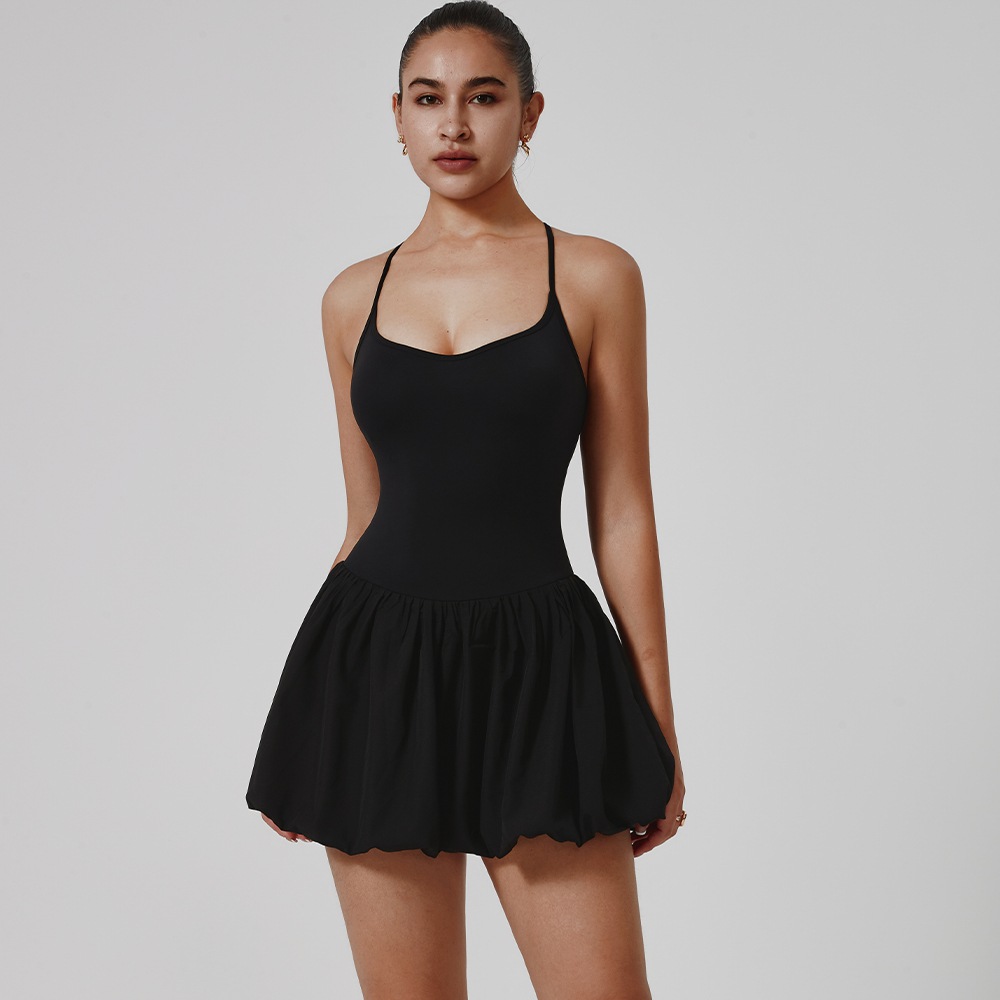
The selected ZR Knitwear page is named Ballet-Inspired Cross-Back Tennis Dress with Built-In Shorts. In the scoped review on November 2, 2026, its catalogue description identifies crisscross back cami straps and a ballet or bubble skirt. Those descriptions identify the product under discussion. They do not specify the detailed endpoint arrangement that a supplier must mark and confirm.
Use the exact product reference:
https://zrknitwear.com/product/ballet-inspired-cross-back-tennis-dress-with-built-in-shorts/
The chosen official cover is a front product-identification view. It does not show the back connection points, and it does not establish inner-shorts construction. Request a separate supplier-marked back reference for the connection map. Keep any separate inner-short questions outside this approval so that a reply about one feature cannot be mistaken for approval of another.
1. Request a clearly oriented back-view reference
Ask the supplier to photograph or draw the back of the exact proposed sample and give that reference a revision. Have the supplier mark the garment left and right as worn, rather than relying on the viewer to interpret a mirrored photograph. State whether the image shows the complete back or a close view of one area.
If one photograph does not make a connection visible, request another identified view linked to the same sample. Avoid inferring a hidden joint from a loose strap end or a partly covered section. The supplier should explain which view documents each endpoint. Record the requested evidence as open until it is provided.
2. Give each strap an identifier before discussing its route
Have the supplier assign a simple identifier to every strap visible in the marked reference. Use the same identifier in the drawing, response sheet and any sample comments. The identifiers are working references proposed for this enquiry; they are not catalogue part numbers unless the supplier explicitly confirms that relationship.
Keep the identifier attached to the physical route rather than renaming the strap when a photograph is turned around. If the supplier changes a label between revisions, ask for a cross-reference. This avoids a later response that appears to answer a question but refers to a different strap. Do not assume how many separate strap pieces the construction contains from the word cross-back alone.
3. Connect every route to two marked endpoints
For each identified strap, ask the supplier to mark its upper endpoint and lower endpoint on the reference. Request a description of the exact areas being joined. A short reply such as connects to back needs a callout that makes the location unambiguous on the selected garment.
If a route appears to pass behind another part, ask whether the line continues to a hidden endpoint and which image shows it. Avoid filling in an unseen route from a similar product. The purpose of the map is to capture the supplier answer for this dress, including any point that remains unconfirmed.
A reusable connection-map record
Photo revision | Strap identifier | Upper endpoint | Lower endpoint | Crossing or adjuster question | Supplier confirmation
Enter the marked reference | Use the supplier-assigned identifier | Link a visible callout | Link a visible callout | State the unresolved question | Open until answered
Link an additional view if needed | Keep the same identifier | Identify a hidden-point evidence view | Identify a hidden-point evidence view | Request the applicable explanation | Record the supplier reply
Link the reviewed sample revision | Retain the agreed identifier | Retain the approved callout | Retain the approved callout | Record any remaining exception | Identify the bounded approval
The rows above are instructions for a blank record. They do not state the construction of the listed dress. Add rows only for routes actually identified by the supplier, and keep unanswered cells visibly open.
4. Ask separately about the crossing and any components
Ask whether the crossing is free or joined, and request the supplier reference that explains the answer. If an adjustable or removable component is proposed, ask the supplier to identify it on the marked view and describe its role. The catalogue description alone does not establish that such a component exists.
Keep component presence and connection location as separate questions. A visible fitting does not by itself explain where the strap ends, while a route sketch may omit the detail needed to identify a fitting. Ask for the evidence that resolves the particular ambiguity. Do not infer strap dimensions, attachment methods or performance from this map.
5. Reconcile the marked reference with sample comments
When sample feedback arrives, refer to the same photograph revision and strap identifier. A comment about a route, a connection or a proposed component should point to the relevant callout. Ask the supplier to reply against that reference so that a response can be understood without reconstructing the whole email conversation.
If the sample or marked view changes, preserve the previous map and request a revised one. Identify the changed routes and carry forward any unanswered question explicitly. Do not let an updated front photograph stand in for a revised back map. An approval should say which marked reference and sample it covers, with exceptions recorded beside the relevant route.
Short FAQ
Does the phrase cross-back establish the complete strap layout?
No. It identifies a catalogue design description. Ask for a marked back view and an explicit route for each supplier-identified strap before approving detailed connections.
Can the selected front cover serve as the endpoint map?
No. It identifies the selected product but does not display the required back connection evidence. The supplier needs to provide a separate applicable reference.
Should adjustment or removable parts be assumed?
No. Ask whether either is proposed for the exact sample, and request a marked reference if the answer is yes. Keep an unanswered question open.
What makes a connection-map approval useful later?
A defined product, oriented back reference, stable strap identifiers, two marked endpoints per route and a revision-bound supplier response. These allow later comments to refer to the same evidence without asserting unverified construction or performance.
Request the marked back reference
Send ZR Knitwear the exact dress URL and a blank connection-map record. Ask for an oriented supplier-marked back view, route identifiers, endpoint callouts and answers about any proposed crossing or adjustment components. Keep the request tied to the specific sample revision.
Contact: https://zrknitwear.com/contact/
Related buying articles: https://zrknitwear.com/blog/