
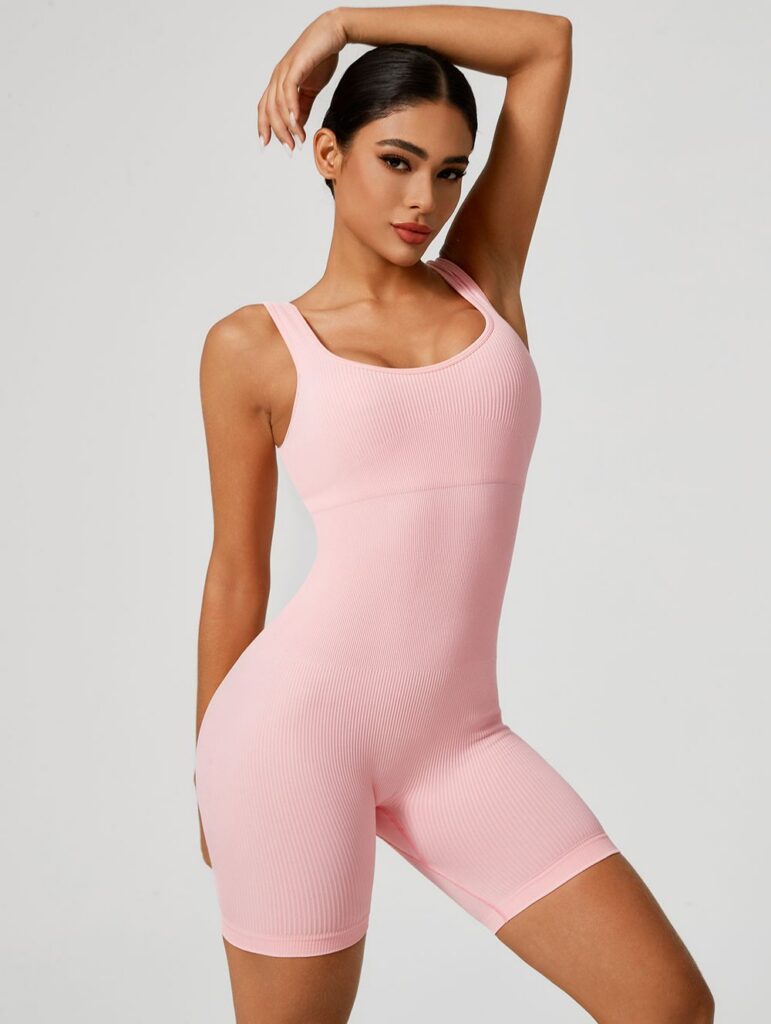
A square-neckline description does not establish the datum behind a front-neck depth entry. For the historical short-length ribbed bodysuit offer, ask whether the supplier declares that depth and which upper reference and neckline landmark its statement uses. Only if a declaration is supplied should the enquiry request the applicable garment state, trim boundary and marked reference. Keep no depth declared and an unresolved endpoint as distinct records. The front catalogue photograph identifies the product without providing a dimension, fit interpretation or measuring procedure.
Identify the exact short bodysuit offer
Use the short-length ribbed bodysuit catalogue reference to identify the listing, then retain the supplier’s offered version and quotation revision when provided. Historical square-neckline wording can locate the subject of the enquiry without establishing every physical detail of the current offer. Keep the declaration attached to the particular version rather than transferring a reference from another garment with similar styling.
If the supplier uses catalogue size labels, preserve them in their original form. They do not independently provide a measured chart, a size conversion or current stock information. A depth reference associated with one named variant should remain limited to that applicability unless the supplier expressly states a broader scope.
Establish whether front-neck depth is declared
Begin with the declaration status. Ask whether the supplier states a front-neck depth for the identified offer. If none has been supplied, record no depth declared. Do not derive an entry from the neckline’s apparent position in the photograph or use a dimension from a different bodysuit version.
If a depth entry exists but its reference is unclear, retain the original wording and mark the datum unresolved. This is different from having no declaration. A purchasing colleague should be able to see whether the next request concerns a missing entry or the meaning of one already received. A familiar dimension label should not conceal a missing reference basis.
Request the supplier’s named upper reference
Where the supplier declares a depth, ask it to identify the upper reference used for that particular entry. Retain the supplier’s naming and applicable document revision. Do not select a garment feature or anatomical landmark from the product image and treat it as the supplier’s starting reference.
If the response identifies only a broad upper region, preserve that description while leaving the exact reference unresolved. The enquiry can be clear about the missing information without supplying a general measurement convention. Its purpose is to understand the supplier’s declared span, not to create a procedure for establishing it.
Request the named neckline landmark
Ask which supplier-named neckline landmark forms the other boundary of the depth statement. Preserve the annotation and its connection to the offered version. Do not infer an endpoint from the apparent square outline or the garment’s presentation in the image. The supplier should identify which part of its own reference the declaration concerns.
Keep a partially explained span incomplete where necessary. A reply may identify the upper reference while leaving the neckline point unanswered, or provide a neckline annotation without explaining the other boundary. Retain each supplied statement and the remaining question together rather than filling the gap from visual appearance.
Clarify garment state and trim coverage
Ask the supplier to state any garment condition associated with its declaration and whether the named trim boundary is included in that basis. These are requests for the supplier’s existing reference scope. They do not establish that a particular trim component is present or that an unprovided condition should be assumed.
Retain any supplied wording beside the drawing revision. If the supplier has not addressed trim or state, keep that detail unresolved. The buyer should not provide wearing, adjustment or measurement instructions to complete the entry. A documentary enquiry can identify the missing basis without prescribing a physical action.
A square-neck depth reference record
Use a record that keeps the offered variant, original declaration and reference gaps together. It should help a purchasing colleague understand what remains unconfirmed without reading a depth from the photograph.
Field | Supplier information to request | Purchasing use
Offer identity | Exact short bodysuit version and quotation revision | Attach the entry to the compared garment
Declaration status | Original front-depth wording or no depth declared | Preserve the evidence actually supplied
Upper reference | Supplier-named starting reference | Avoid inventing a landmark
Neckline reference | Named boundary used for the declared span | Keep the endpoint attributable
Declared basis | Garment state and trim inclusion as supplied | Retain the statement’s covered scope
Evidence and open item | Marked reference, revision and unresolved detail | Direct the next correspondence accurately
In an illustrative enquiry, a buyer may receive a front-depth heading without a marked upper reference. The record can retain the heading under the offered bodysuit version and leave that boundary unresolved. The next request asks the supplier for its applicable marked reference and stated trim scope. No value or landmark needs to be estimated from the product image to progress the enquiry.
Keep other garment dimensions separate
Torso length and strap width describe different references from front-neck depth. Size-code labels and care wording also answer other questions. Keep those records for their stated roles rather than using an answered adjacent field to complete an unresolved neckline datum. A supplier can provide detailed product information while leaving this particular reference unexplained.
The front product photograph also does not establish rear strap connections, hidden construction or a label specification. Preserve its product-identification role without expanding it into evidence for unseen features. The present enquiry should remain attached to the supplier’s declaration and applicable document, not an interpretation of what the photograph might imply.
Separate reference clarity from wearing outcomes
A clarified depth datum does not establish low or high fit, coverage, support, comfort, stretch or performance. If a separate supplier claim is raised, retain its exact wording and version applicability with its own evidence questions. A completed reference field should not imply acceptance of those wider outcomes.
When a revised reference arrives, identify which earlier question it answers and the offer version it covers. Distinguish clarification of the same declaration from a changed garment scope. For handover, provide the exact wording, named boundaries, stated condition, trim scope and remaining question together so another buyer can continue without filling missing facts from a similar-looking image.
Frequently asked questions
Can a square neckline in the photograph establish front depth?
No. Request the supplier’s declaration and named references rather than deriving a value from appearance.
Does a catalogue size label provide the depth datum?
No. A size-code identity does not define the reference boundaries of a dimensional entry.
What if only one endpoint is identified?
Retain the supplied reference and mark the other endpoint unresolved until clarified.
Does a clarified depth reference establish coverage or fit?
No. Reference identification does not validate support, fit or other wearing outcomes.
Use the official bodysuit page to identify the historical catalogue product in the enquiry.
https://zrknitwear.com/product/seamless-ribbed-workout-bodysuit-short-length/
Send the exact offered version, the supplier’s depth wording and the missing boundary question through the contact page.
https://zrknitwear.com/contact/
Related purchasing articles are available in the blog.
https://zrknitwear.com/blog/