
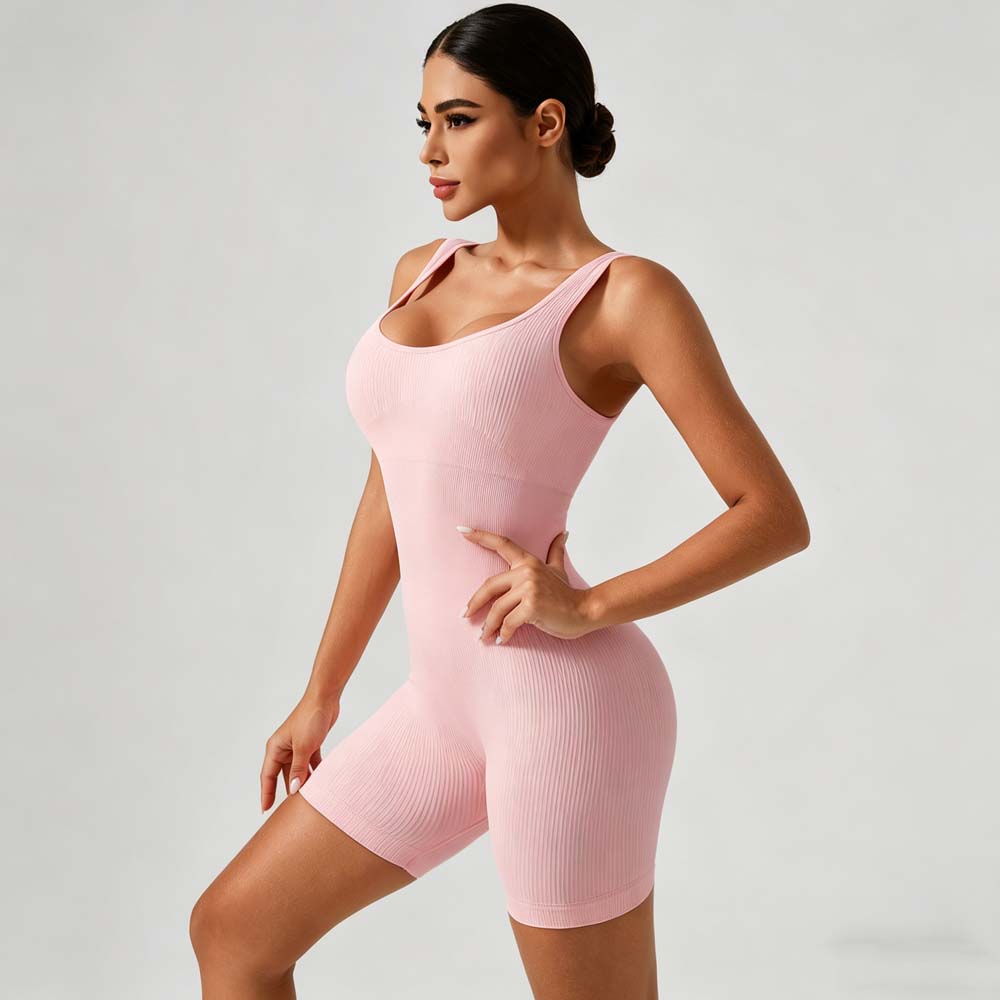
A physical sample assortment needs its own coverage record. For the item historically named Seamless Ribbed Workout Bodysuit, Short Length, a buyer should first establish whether the supplier actually offers a multi-size sample set. Only then can the buyer ask which labelled sizes are included, which are omitted and whether the supplier expressly assigns any representation to an unprovided size. The catalogue labels alone cannot answer those questions.
Confirm the actual sample-set offer
Identify the exact bodysuit version and the supplier’s applicable offer reference. Ask whether a physical multi-size sample set is actually offered for that version. A product page, an image or a conversation about size labels does not establish that a sample assortment is available. Keep no set offered and offer not confirmed separate, following the supplier’s actual response.
This prerequisite keeps the enquiry focused on an offered physical assortment. It does not request a sample service as though one were already provided. If the supplier has not confirmed a set, the included-size fields remain unresolved. A buyer can still record the requested version and the unanswered prerequisite without describing a future sample supply as an established arrangement.
Map supplied samples to literal labels
For an expressly offered set, request the supplier’s exact labelled sizes and the references identifying the supplied samples. Preserve each label as given and connect it to the stated bodysuit version. The historical S, M, L and XL labels remain catalogue identifiers. They do not establish measured dimensions, a conversion chart, current stock or the contents of this particular sample offer.
A size label and a sample reference serve different purposes. The label identifies the supplier’s stated size designation; the sample reference identifies what the response says is provided. Where that relationship is unclear, mark it unresolved. Do not complete the list from a catalogue sequence or assume that every historically listed label appears in the offered physical set.
Record omitted sizes explicitly
Ask the supplier to identify any sizes outside the offered sample assortment. An omitted label is not the same as an unavailable product or a discontinued size. It describes a boundary of the sample offer. Retain that distinction so a purchasing colleague does not read the sample list as a complete statement about the supplier’s commercial size range.
Similarly, an unanswered inclusion question is not an express omission. Keep size not supplied, inclusion not stated and label not confirmed separate where the evidence requires it. A supplier response that names some samples may still leave the rest of the buyer’s requested coverage unresolved. The record should expose that gap instead of completing it by assumption.
Keep representation as an attributed statement
If a size is not provided, ask whether the supplier expressly says it is represented by a supplied sample. Preserve the exact wording, the supplied sample reference and the unprovided label to which it applies. Without that declaration, representation is not confirmed. A neighbouring label or a similar-looking garment cannot establish this relationship for the buyer.
An attributed representation statement does not prove equivalent fit, correct grading or acceptance of every size. Record its stated scope and any explicit limitation without converting it into a technical conclusion. A supplier may identify a narrow reference purpose; the purchasing record should not broaden that purpose into a general approval of the omitted garment or a production lot.
Coverage record field | Supplier information to retain | Open boundary
Product version | Exact short-length bodysuit and offer reference | Version not confirmed
Set offer | Express physical multi-size sample-set statement | No offer or unanswered prerequisite
Included labels | Literal sizes and supplied sample references | Inclusion not stated
Omitted labels | Supplier-identified unprovided sizes | Not a stock conclusion
Representation | Express link to a supplied sample and its limits | Not confirmed by label proximity
Applicable revision | Respondent and current reference | Conflicting coverage awaiting clarification
Resolve a concrete sample enquiry
Consider a buyer who requests coverage across several historical size labels. The supplier confirms a sample-set offer but identifies only part of the proposed range. The buyer can record those supplied sample references and ask which requested labels are omitted. That reply still does not establish whether an omitted size is represented by another sample. Representation needs its own attributable statement, rather than a buyer-created extension of the inclusion list.
If the supplier has not linked a supplied sample to an exact version, the version field remains open even when a size label is named. Keeping that identity gap visible helps avoid treating an example for another bodysuit configuration as coverage of the current offer. The buyer can direct the follow-up to the missing reference without restarting the whole enquiry.
Separate coverage from garment approval
A sample coverage record identifies what the supplier says the assortment includes. It does not determine how a garment fits, whether size grading is correct or whether one configuration represents another. The catalogue product-identification photograph does not supply those conclusions. Likewise, the Seamless and Ribbed catalogue words do not resolve material, construction, support or performance questions.
Earlier discussions of torso, strap or neckline datums concern different attributes. They should not be imported as proof of sample-size coverage. If a supplier refers to another document, retain its actual relationship to the assortment and the version it covers. A reference to an existing size document is not automatically an express representation statement for an omitted sample.
Make the handover precise
The purchasing handover can distinguish an offered set with identified labels, an incomplete inclusion list and an unresolved representation request. Keep the source and revision visible for each declaration. This lets the next colleague see whether the missing answer concerns the set offer, a sample identity, an omitted size or the supplier’s stated representation boundary.
When a later reply changes the coverage, retain the earlier response as history and identify the current statement. Do not silently extend a previous assortment to a changed bodysuit version. Request the supplier’s applicable reference so the record describes the actual offer rather than a combination of incompatible replies.
Frequently asked questions
Do historical size labels prove a physical sample set is offered?
No. Catalogue labels identify historical size designations. They do not establish a sample assortment, current availability or supplied contents. First request an actual physical multi-size sample-set statement for the identified bodysuit version, then record the included labels and sample references the supplier provides.
Does an omitted sample mean that size is unavailable to order?
No stock or order-availability conclusion follows from sample omission alone. Record the supplier’s stated sample coverage boundary. If a size is not included, preserve that fact without turning it into a claim about the complete product range or another commercial offer.
Can a supplied size automatically represent a neighbouring label?
No. Representation requires an express supplier statement connecting the unprovided label to an identified supplied sample. Preserve any limitation in that statement. Similar labels or appearance do not establish the relationship, and an attributed declaration is not independent proof of equivalent fit or correct grading.
Does confirming the set approve the whole production range?
No. This record defines the stated sample assortment and any attributed representation scope. It does not approve fit, grading, production quantities or product performance. Keep those conclusions separate and leave unprovided information unresolved rather than expanding a narrow sample-offer reply.
Use the historical product reference to identify the bodysuit enquiry, then request the actual set offer, supplied labels, omitted sizes and any express representation limits from the supplier.
https://zrknitwear.com/product/seamless-ribbed-workout-bodysuit-short-length/
https://zrknitwear.com/contact/
https://zrknitwear.com/blog/