
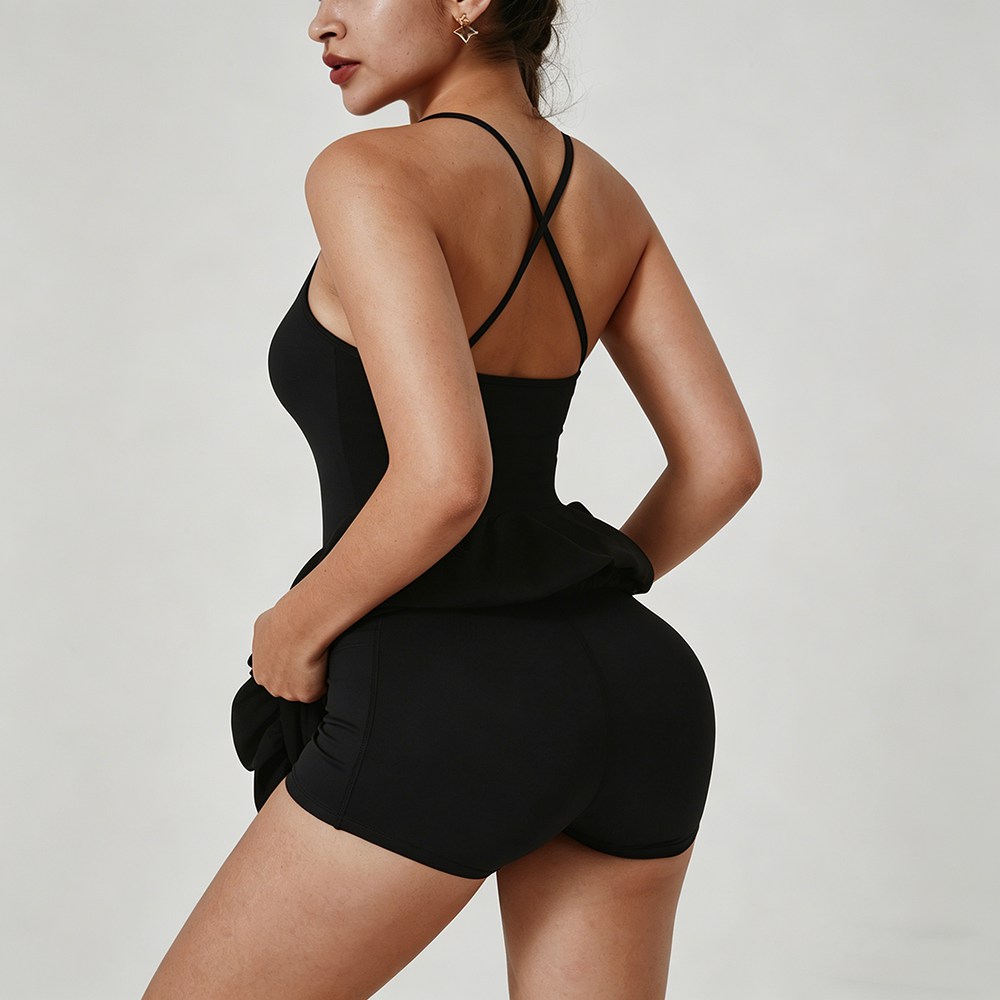
A minimum-order rule for a tennis dress needs a defined complete-product unit and an explicit assortment boundary. For the historical Ballet-Inspired Cross-Back Tennis Dress with Built-In Shorts offer, first identify the supplier-confirmed dress configuration and variants. Only an actual supplier minimum declaration can establish how those lines are counted together. The product title does not create a minimum, a mixed-order permission or a separate commercial unit for an inner component.
Identify the complete dress offer
Connect the enquiry to the supplier’s product reference, quote revision and confirmed configuration. The historical catalogue title helps identify the dress being discussed. It does not settle which current size or colour versions are offered, nor does it establish a separate inner-short sale. Keep the supplier’s actual configuration statement alongside the commercial enquiry rather than completing it from the front image.
If the dress or inner-short configuration is not confirmed, retain that gap. A commercial response for another configuration should not automatically govern this one. The buyer’s proposed variants can remain listed as requests until the supplier confirms which lines its offer covers. That distinction matters before applying any declared minimum to an assortment.
Establish that a minimum is actually declared
Ask whether the supplier states a minimum-order rule for the identified complete-dress offer. Where none is supplied, record minimum not stated. Do not insert a quantity from another garment quotation or treat a catalogue size list as a commercial condition. A product identity can support a specific enquiry without providing the missing rule.
When a minimum statement is provided, preserve its wording, source and applicable revision. Keep the supplier’s declaration separate from the buyer’s interpretation. A response may mention a minimum without identifying the counted unit or the relevant variant group. The statement can be retained while those unanswered parts remain open for clarification.
Define the counted complete-product unit
Request the supplier’s literal commercial unit and the complete product it represents in the offer. The catalogue words built-in shorts do not establish a second finished selling unit. They also do not authorise dividing a complete dress into component order lines. Preserve the supplier’s actual unit designation without inventing a component count or a separate-sale arrangement.
Carton descriptions, parts references and garment configuration statements should not silently replace the commercial unit. They may describe different objects. Ask the supplier which counted object its minimum concerns, and retain unit not confirmed where the reply is unclear. This keeps the minimum enquiry tied to the complete offered dress rather than a buyer-created breakdown.
Request the aggregation scope
Only if a minimum is actually stated should the buyer ask whether it applies per offered dress style, per confirmed size or colour version, or across an expressly accepted combined order. These are questions for the supplier to resolve. They are not permissions that follow from a shared photograph, catalogue title or proposed assortment.
Record the applicable line references with the answer. A statement for one version should not be extended to another simply because both are called tennis dresses. Historical size labels remain labels rather than measured conversions or availability evidence. Colour images likewise do not establish current shade supply, a dye-lot relationship or eligibility to combine lines under one minimum.
Keep the proposed assortment distinct
Present the intended size or colour lines as a buyer proposal and request the supplier’s actual treatment of that assortment. Keep mixing not approved separate from an unanswered mixing question. If the supplier expressly accepts a combined basis, retain the scope and reference of that response. Do not add a ratio, price condition or order-acceptance conclusion that was not provided.
This distinction helps when a reply confirms product identity but says nothing about aggregation. The buyer can retain the confirmed configuration while leaving the assortment decision unresolved. Confirmation of a dress version does not establish that the proposed mix meets a minimum, and it does not imply stock or a delivery commitment.
Assortment record field | Attributed supplier information | Unresolved state
Complete offer | Dress configuration and quote revision | Configuration not confirmed
Variant lines | Sizes or colours actually confirmed | Buyer proposal only
Minimum rule | Exact applicable declaration | No rule supplied
Counted unit | Supplier’s complete-product designation | Unit not identified
Aggregation scope | Style, version or accepted combination basis | Scope unclear
Proposed mix | Express supplier treatment of named lines | Not approved or unanswered
Use the record for a concrete buying decision
Consider a buyer proposing several size and colour lines for the cross-back dress. A supplier reply may confirm the dress reference while leaving both the minimum and the proposed combination unanswered. The buyer should retain that product confirmation without describing the assortment as eligible. The next request can ask whether a minimum is declared and, if so, how its counted unit and aggregation scope apply to those confirmed lines.
If a later reply supplies a minimum but covers only a named version, retain that limited applicability. Do not calculate a broader assortment into an accepted offer. The missing question is whether the supplier expressly permits the proposed combination under the stated rule. Keeping that issue visible prevents an internal summary from overstating the commercial response.
Preserve changes and boundaries
Link clarifications to the quote revision they concern. If a configuration or variant reference changes, ask whether the existing minimum and mixing statement still applies. Earlier replies can remain in the enquiry history without automatically governing the changed offer. A handover should identify the current supplier statement and the specific unresolved field.
The resulting record concerns quotation eligibility. It does not establish comfort, fit, support, product performance, component availability or an accepted order. Earlier lining, skirt and inner-short discussions remain separate product questions. They cannot supply a minimum aggregation rule simply because they concern the same historical dress identity.
Frequently asked questions
Does the built-in-shorts title create a separate selling unit?
No. The catalogue wording does not establish separate component sales or a second counted finished product. Ask the supplier to identify the complete-product commercial unit for its actual offer. Keep an unconfirmed dress configuration open rather than creating order lines from named garment components.
Can all historical sizes and colours share one minimum?
No aggregation permission follows from historical labels or images. Obtain an actual minimum statement and the supplier’s scope for confirmed variant lines. A combined basis applies only where the supplier expressly accepts that treatment for the identified assortment, with its applicable reference retained.
What should happen when a minimum has no clear unit?
Preserve the statement and record unit not confirmed. Ask which complete offered product the supplier counts and which quote revision it covers. Do not substitute a carton, an inner component or another garment’s unit to make the commercial record appear complete.
Does mix approval mean the order has been accepted?
An assortment response alone does not establish an accepted order, stock, price or delivery. Keep the supplier’s actual mixing statement within its stated minimum-rule scope. Other commercial outcomes require their own attributable information and should not be added to a narrow aggregation answer.
Identify the historical dress below, then request the supplier’s confirmed configuration, actual minimum declaration, counted complete-product unit and explicit treatment of the proposed assortment.
https://zrknitwear.com/product/ballet-inspired-cross-back-tennis-dress-with-built-in-shorts/
https://zrknitwear.com/contact/
https://zrknitwear.com/blog/