
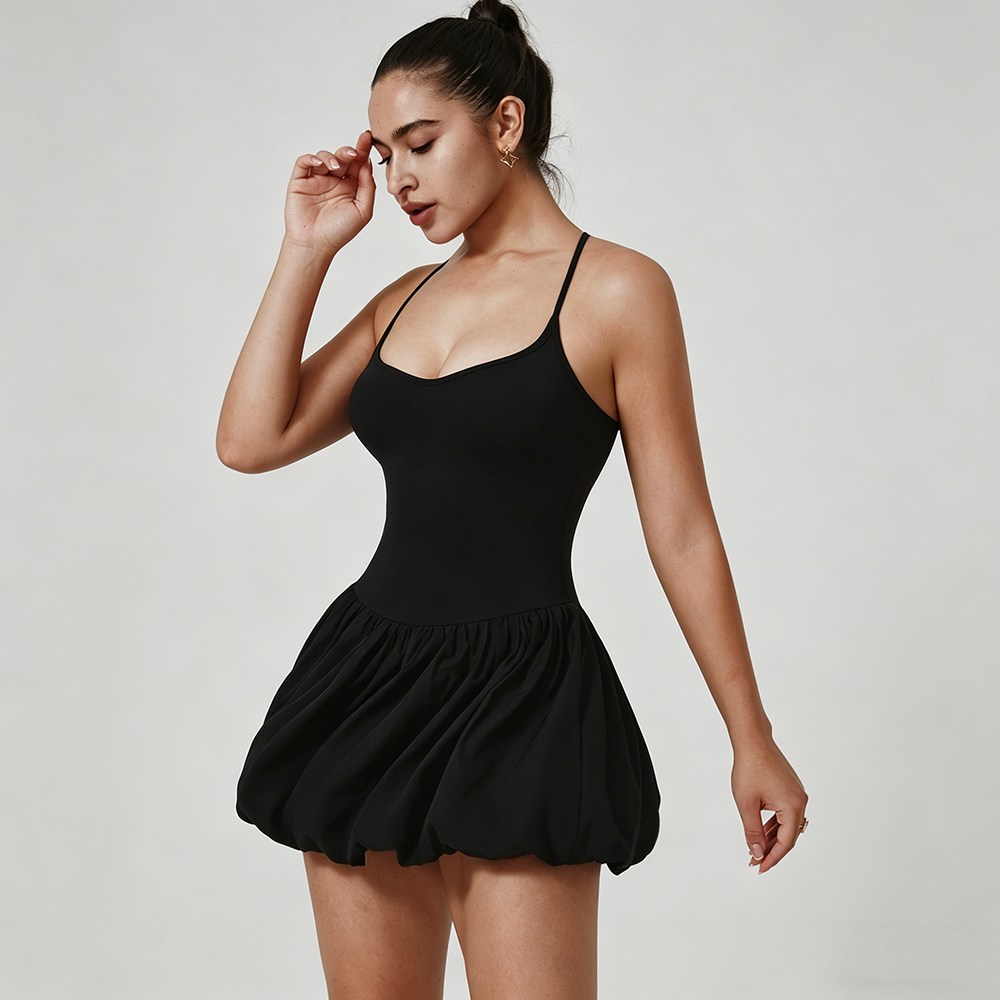
Build a tennis-dress colour index by connecting each proposed order colour to a supplier-identified sample or swatch and an exact photograph reference. Keep catalogue image identity, supplier colour wording and the buyer’s decision in separate fields. An attractive screen image cannot establish a stocked colour, a dye-lot match or an agreed physical appearance. The useful purchasing output is a crosswalk that shows which evidence supports each colour request and which questions remain open.
Use the catalogue dress as an identity reference
ZR Knitwear names the selected product Ballet-Inspired Cross-Back Tennis Dress with Built-In Shorts. The catalogue wording identifies the reference style. An earlier catalogue image shows the dress straight on. The selected cover shows a separate three-quarter view of the black dress. Neither view establishes the back strap connections or inner-shorts construction. For this task, use it to identify the garment being discussed, then ask the supplier which offered colour and physical reference its response actually covers. Do not infer a colour code from the picture.
Colour conversations become difficult when the buyer’s name for a shade differs from the supplier’s. Two similar words can refer to different reference samples, while one supplier code can be used loosely across several messages. Preserve the literal words and codes in the columns where they originate. A buyer can then ask whether two references mean the same proposed offer without silently merging them into one approved order line.
Distinguish the image from the offered colour
A catalogue photo, a supplier-sent sample photograph and a physical swatch have different roles. The catalogue photo locates the style. A later photograph may identify a proposed sample if the supplier says so. A physical reference can be recorded when it is actually supplied and identified. None of these relationships should be assumed merely because the images look similar. Ask the supplier to state the relationship in its response.
Do not describe a sample photo as a calibrated colour standard unless suitable evidence actually establishes that role. Screen settings, image processing and viewing conditions can affect appearance. This article does not supply a colour tolerance or prescribe a colour test. It shows how to retain reference identities so the buyer can decide what further evidence is needed before approving an order colour.
Compare the references in one index
Index field | Supplier information to request | Buyer record to retain
Offer and style | Exact dress reference covered by the response | Link to the intended order item
Supplier colour identity | Literal code and wording actually used | Preserve without substituting a buyer name
Photo reference | File or message identifier and what it depicts | Identify the exact received image
Physical reference | Sample or swatch identifier, if supplied | Record availability and review status separately
Decision scope | Which offer and reference the proposed colour covers | Approve, question or leave pending
This index does not require the supplier to operate a particular colour system or provide a swatch service. It asks what information is actually available. Where an item is missing, mark it unavailable and state the question. A blank reference should not be replaced with a code copied from another garment. Similarly, a buyer’s internal colour nickname should not be presented as the supplier’s confirmed catalogue code.
Give each received photo a stable role
Record the original received file name or message reference before assigning a buyer tracking name. Ask whether the image depicts the exact proposed dress sample, a general colour example or another article used only for reference. That answer changes the evidence scope. An image of a different article may help locate a conversation, but it does not establish how the colour will appear on the selected dress.
Where several views are received, keep them associated with the supplier’s stated sample identity rather than treating each image as a separate colour option. Conversely, do not merge two different samples simply because their photos appear alike. A short note such as “supplier identifies these files as sample reference A” is clearer than an unsupported statement that the shades match. Preserve the supplier’s limits and any unanswered relationship questions.
Keep garment components and colour requests distinct
If the buyer wants different components considered separately, request a supplier-marked component reference. Do not assume that the front image reveals every component or that a requested contrast panel is available. The catalogue product name alone cannot establish a separate colour choice for an inner section, strap or trim. The index can hold the request while the supplier confirms the offered configuration and the exact reference it can provide.
This keeps the colour task separate from earlier construction questions. A strap-connection map addresses where garment parts join. An inner-shorts review addresses assembly or inclusion. The colour index instead records which reference supports each proposed colour statement. Repeating the construction specification in this file can obscure the colour decision, so link to the relevant separate record when one exists rather than claiming it has been re-approved.
Record a decision that another buyer can follow
When the responsible buyer reviews the supplied references, record the exact offer and reference selected. State whether the decision concerns a physical sample, an identified photograph or only the wording of a request. Do not let an approval of a photo reference become a promise of dye-lot equivalence, colourfastness or current stock. Those are separate questions and require their own evidence if relevant to the purchase.
If the supplier later changes the proposed reference, retain the earlier index version and open a new decision for the change. A simple crosswalk between old and new identifiers makes the update easier to discuss. It is more useful than overwriting the old photo name and losing the basis of the previous decision. The objective is a traceable purchasing conversation, not an unsupported assurance that every delivered unit will match a screen image.
Frequently asked questions
Can we copy a colour code from the catalogue photograph?
No code should be invented from appearance. Ask the supplier for the literal identifier it uses for the exact proposed offer. Keep a buyer nickname in a separate field until the relationship is explicitly confirmed.
Does a supplier photograph establish physical colour accuracy?
It establishes an image reference and whatever sample relationship the supplier actually states. It does not, by itself, prove a calibrated match, a particular tolerance or the appearance of a future production lot.
Must every proposed colour have a physical swatch?
This workflow makes no such supply promise. Ask what references are available and record their status. The buyer then decides whether the evidence is sufficient for the intended purchasing decision or whether clarification is still required.
Does this index approve the inner shorts or back straps?
No. Those are separate construction questions. The selected front cover does not establish them, and the colour record should not imply that either assembly or attachment details have been reviewed again.
Send a focused colour-reference request
Use the exact dress page as the style reference and send the supplier a short index with the unresolved fields visible. Ask for its offered colour identity and the references it can actually provide. Use other blog material as context, while keeping the order-specific decision tied to the received evidence.
https://zrknitwear.com/product/ballet-inspired-cross-back-tennis-dress-with-built-in-shorts/
https://zrknitwear.com/contact/
https://zrknitwear.com/blog/